
Jsou vaše produktové popisy připravené na AI svět?
Jsou vaše produktové popisy připravené na AI vyhledávače? Zjistěte, co LLM systémy potřebují, a otestujte si svůj e-shop pomocí jednoduchého promptu.

Produktové popisy většiny e-shopů jsou pro AI neviditelné – a tento problém se každým měsícem prohlubuje.
Ještě donedávna stačilo, aby byl popis čitelný, SEO-friendly a pomohl zákazníkovi rozhodnout se na produktové stránce. To fungovalo ve světě, kde výběr produktu znamenal projít odkazy a porovnat několik e-shopů.
Tenhle svět se ale mění.
Jak se mění způsob, jakým zákazníci objevují produkty
LLM systémy – AI vyhledávače, konverzační asistenti a doporučovací modely – dnes shrnují obsah webů, odpovídají na dotazy zákazníků a navrhují konkrétní produkty.
Nehledají „nejhezčí text". Snaží se pochopit produkt a jeho kontext.
Pokud jim produktový popis neposkytne jasné a jednoznačné informace, AI produkt správně nezařadí, neumí ho porovnat, nebo ho vůbec nezahrne do doporučení. A to je přesně místo, kde dnes většina e-shopů ztrácí viditelnost.
Co LLM systémy z produktového popisu skutečně potřebují
LLM nehodnotí stylistiku ani marketingový tón. Hodnotí informaci a význam.
Z praxe vidíme, že AI systémy potřebují mít v popisu jasně zodpovězeno: Co přesně je tento produkt? Pro koho je vhodný? V jakých situacích dává smysl ho doporučit? Kdy naopak vhodný není? Jaká má omezení, specifika nebo kompromisy?
Bez těchto signálů AI nerozliší produkt od podobných alternativ, neví, kdy ho doporučit, a často ho raději úplně vynechá.
Příklad: Jak vypadá LLM-ready popis v praxi
Podívejme se na konkrétní příklad – kuchyňský robot KitchenAid Artisan. Vlevo původní popis z e-shopu, vpravo optimalizovaná verze:
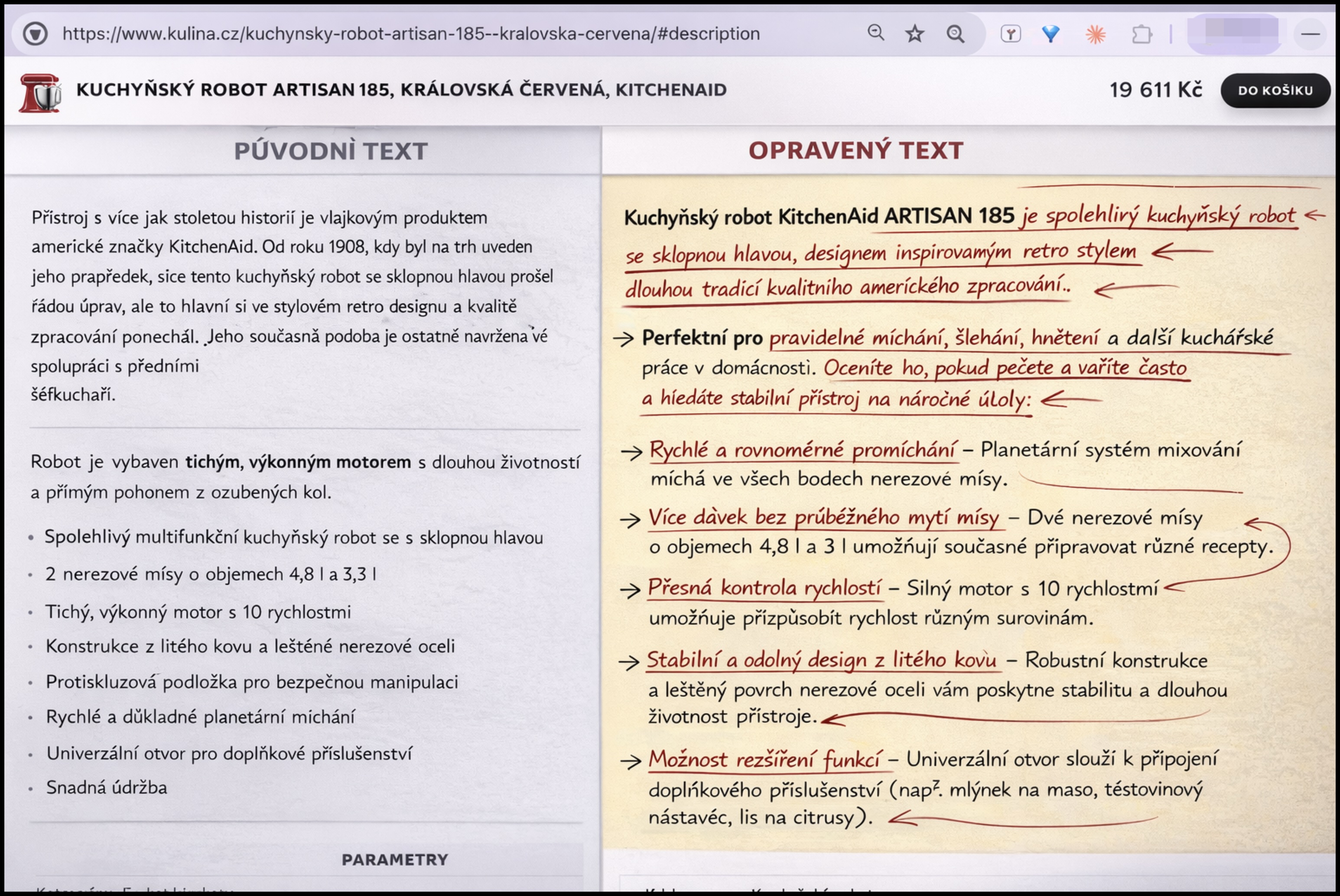
Srovnání původního a LLM-ready produktového popisu (KitchenAid Artisan 185)
Všimněte si klíčových rozdílů: optimalizovaný popis jasně definuje, pro koho je produkt určen („oceníte ho, pokud pečete a vaříte často"), strukturuje benefity podle použití, a obsahuje konkrétní informace o možnostech rozšíření. AI systém z takového popisu jednoznačně pochopí, kdy má produkt doporučit.
Nejčastější chyby v produktových popisech
U e-shopů se opakují velmi podobné problémy: není jasně řečeno, pro koho produkt je (nebo není), omezení se zamlčují, protože „to se přece nepíše", použití je popsané obecně bez konkrétních scénářů, struktura se liší produkt od produktu, a klíčové informace jsou schované v dlouhých odstavcích.
Pro člověka je takový popis často „dost dobrý". Pro AI je ale nejednoznačný a nespolehlivý.
Proč se tento problém bude zhoršovat
LLM systémy se postupně stávají vstupní branou k produktům. Rozhodují o tom, co uživatel uvidí, s čím bude porovnávat a co dostane doporučeno.
Důležité je, že nepřijde žádný „velký pád" a nevznikne jeden jasný problém, který by šel snadno identifikovat. Místo toho budou e-shopy postupně méně viditelné, méně doporučované, méně relevantní. Pomalu. Nenápadně. Ale systematicky.
Proč ruční přepisování popisů nestačí
Častá reakce je jednoduchá: „Tak popisy přepíšeme." V praxi to ale naráží na realitu e-commerce – stovky nebo tisíce produktů, více trhů a jazyků, časté změny sortimentu, nutnost konzistence.
Ručně je takový přístup drahý, pomalý, a dlouhodobě neudržitelný. Navíc bez jasných pravidel vzniká každý popis trochu jinak. A nekonzistence je pro AI větší problém než horší stylistika.
Jak k produktovým popisům přistupujeme v LOCO
V LOCO se na produktové popisy díváme jako na infrastrukturu e-shopu – stejně důležitou jako feedy, ceny nebo skladová data.
To znamená jednotnou strukturu napříč katalogem, jasně definované informace, které musí každý popis obsahovat, škálovatelnou automatizaci, a obsah, kterému rozumí člověk i AI.
Nejde o „hezčí copy". Jde o obsah, který AI správně pochopí, dokáže ho porovnat a doporučit.
Praktický test: Je váš e-shop LLM-ready?
Pokud si chcete ověřit, jak na tom vaše produktové popisy jsou, zkuste si jednoduchý test. Zkopírujte prompt níže a vložte ho do ChatGPT nebo jiného LLM spolu s vaším produktovým popisem:
You are an AI system evaluating a product description for AI-driven search and recommendation systems.

Analyze the following product description and answer these questions:

1) Is it clear what the product is and what category it belongs to?
2) Is it explicitly stated who the product is suitable for?
3) Is it clear in which situations the product should be used?
4) Is it explicitly stated who the product is NOT suitable for or what its limitations are?
5) Can the product be reliably compared with alternatives based on this description?

Rate each area from 0 to 10 and briefly explain what information is missing or unclear.

Product description to evaluate:
[PASTE PRODUCT DESCRIPTION HERE]
Pokud dostanete vágní odpovědi nebo nízké skóre, je to jasný signál, že AI nemá dostatek informací, aby váš produkt správně pochopila a doporučila.
Chcete AI audit produktového obsahu?
V LOCO pracujeme s produktovým obsahem e-shopů každý den. Vidíme, kde AI ztrácí kontext, důvěru a schopnost produkty doporučovat.
Pokud chcete objektivní hodnocení produktových popisů z pohledu LLM, identifikovat systémové chyby napříč katalogem, nebo získat konkrétní doporučení, co zlepšit – napište mi.
Stačí poslat odkaz na e-shop nebo několik produktů a připravíme vám AI audit produktového obsahu.
— Petr Sedláček, LOCO

Petr Sedláček
LOCO vyvýjíme jako autonomní AI platformu, která e-shopům zjednodušuje expanzi tím, že převezme celý proces lokalizace — rychle, kvalitně a bez manuální práce.


